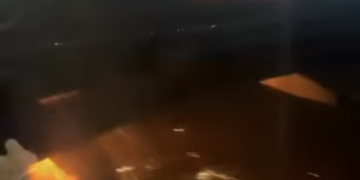



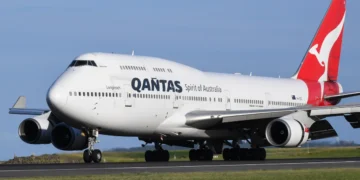



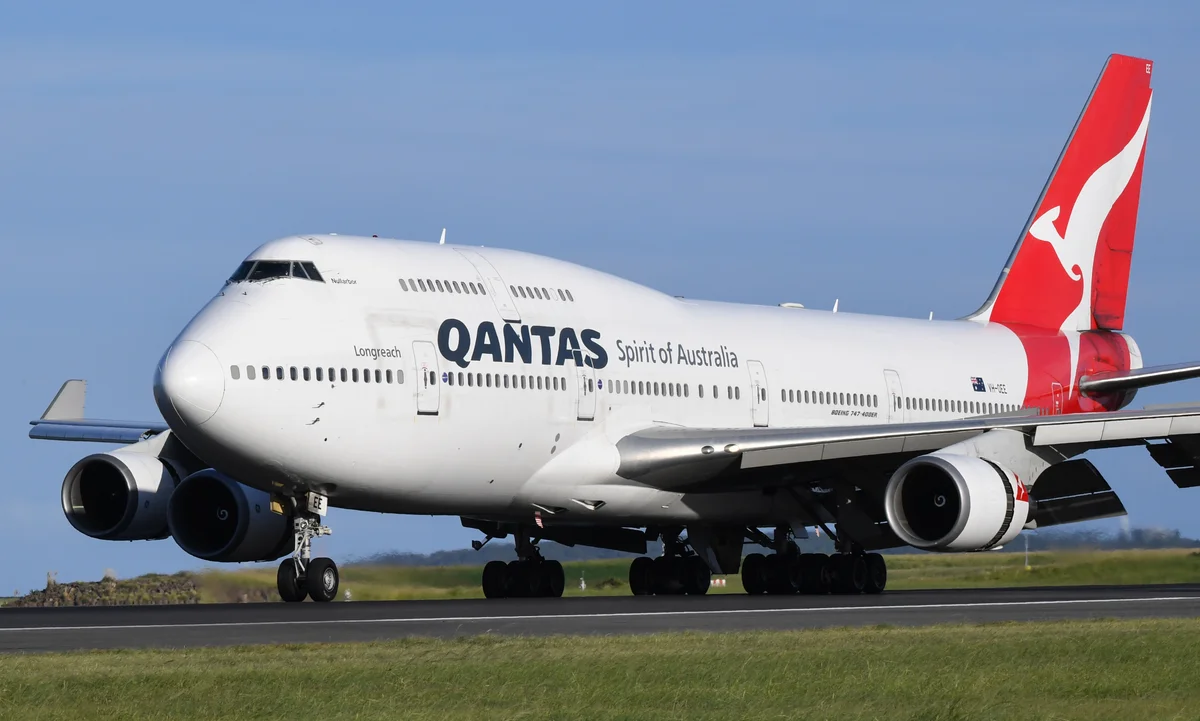
Qantas Flight QFA141 from Sydney to Auckland triggered a full-scale airport emergency when the Boeing 737 pilot issued a mayday call 45 minutes into the trans-Tasman crossing, reporting intermittent fire indications in the forward cargo hold that prompted immediate diversion back to Auckland International with 156 passengers aboard.
The aircraft landed safely at 11:47 AM local time after emergency services mobilized from Whangārei—150km north—alongside Auckland’s full complement of fire trucks and ambulances. All passengers disembarked without injury as Qantas engineers inspected the aircraft, confirming no actual fire but pinpointing a faulty sensor in the cargo smoke detection system.
Live ATC recordings captured the pilot’s calm execution: “Qantas 141, mayday mayday mayday, suspect forward cargo fire, returning Auckland.” Auckland Tower cleared priority runway 05R with fire services standing by. Post-landing checks revealed intermittent false positives from the detection unit—no heat damage or smoke residue found.
Cargo Fire False Alarm Exposes Detection System Vulnerabilities
Boeing 737 cargo smoke systems rely on dual ionization sensors vulnerable to electrical interference and contamination. Qantas maintenance traced the fault to a degraded sensing element in the forward bay, common on high-cycle narrowbodies averaging 8.2 flights daily across the 737 fleet.
Recent Oceanic Cargo Fire Alerts (2025):
| Date | Operator | Aircraft | Outcome |
|---|---|---|---|
| Sep 25 | Qantas | B737-800 | False alarm, safe return |
| Jul 21 | Virgin Australia | B737-800 | Locker fire (lithium battery) |
| Jun 15 | Jetstar | A321neo | Diversion Shannon |
| May 8 | Air NZ | A320neo | Safe landing AKL |
Qantas Rapid Response Demonstrates Crisis Maturity
Captain’s textbook handling—immediate descent conserving fuel while maintaining ETOPS separation—prevented escalation. Auckland Airport activated full emergency protocol scrambling 12 fire units within 8 minutes of the call. Passenger statements described “professional calm” from crew throughout the 90-minute turnaround.
Qantas Group CEO Vanessa Hudson commended “flawless execution” while announcing fleet-wide sensor checks across 120 Boeing 737s operating Australia-New Zealand routes. The airline operates 28 daily trans-Tasman frequencies dominated by B737-800s averaging 12.4 years service.
Trans-Tasman Fleet Snapshot:
| Operator | Aircraft | Daily Flights | Average Age |
|---|---|---|---|
| Qantas/Jetstar | B737/A321 | 28 | 12.4 years |
| Air NZ | A320/A321 | 22 | 9.8 years |
| Virgin Australia | B737 | 15 | 11.2 years |