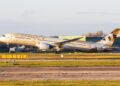


Middle East Airlines (MEA), Lebanon’s national carrier, took delivery of its first Airbus A321XLR at Airbus’s facility in Hamburg, Germany, on Tuesday, 17 November. The aircraft is the first of five A321XLRs the airline has on order, according to Airbus.
The jet, registered OD-XLR, departed Hamburg for Beirut’s Rafic Hariri International Airport following the handover.
Cabin and performance
MEA’s A321XLR seats 160 passengers in two classes, with 22 fully lie-flat business-class seats and 138 seats in economy. Airbus says the type delivers a 30 per cent reduction in fuel burn per seat compared with previous-generation aircraft.
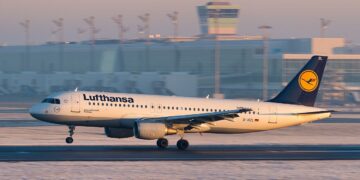
The A321XLR is the longest-range member of the A320neo family, using an additional fuel tank in the lower fuselage to reach up to around 4,700 nautical miles. That range allows airlines to operate single-aisle aircraft on routes that previously required widebodies, opening thinner long-haul markets.
A milestone for the launch customer
The delivery carries extra significance because MEA was the first airline to order the A321XLR, placing a firm order in 2019 as the type’s launch customer. The programme subsequently ran behind its original schedule as Airbus worked through certification requirements related to the new fuel tank, with first deliveries to other carriers taking place from late 2024.
For MEA, which operates a compact all-Airbus fleet from its Beirut hub, the XLR provides the range to reach destinations across Europe, Africa and the Gulf with a lower-cost narrowbody, while offering a premium cabin comparable to larger aircraft.
Where the XLR fits
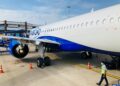
A growing number of operators are now flying the A321XLR, using it to launch transatlantic and other long, thin routes. In India, IndiGo has also placed orders for the type and has spoken of using it to expand its international network, a reminder of how the aircraft is reshaping long-haul strategies at low-cost and full-service carriers alike.
What it means
For Airbus, each new XLR operator broadens the commercial case for the variant and strengthens the A321neo’s position against the Boeing 737 MAX family, which has no direct equivalent. For MEA, the arrival of the aircraft marks the start of a fleet renewal step it committed to seven years ago.
The handover also comes at a time when Airbus is working to lift A320neo-family output amid continuing supply-chain constraints, particularly for engines and cabin equipment. Every A321XLR delivered is closely watched by customers waiting for their own aircraft, from European flag carriers to Asian low-cost airlines.
The remaining four aircraft are due to follow, and the airline’s choice of routes for the type will be watched closely as an indicator of how carriers in the region intend to use long-range narrowbodies.
Featured image: Photo: Acroterion / Wikimedia Commons, CC BY-SA 4.0 (file photo)