




The US Federal Aviation Administration (FAA) halted departures at airports across the United States on Friday, 13 November, after communications failures disrupted radar and radio systems at air traffic control centres. The nationwide ground stop began at around 4 p.m. Eastern time and lasted about four hours. Transportation Secretary Sean Duffy said US airspace was reopened at 8:15 p.m. Eastern, with departures resuming gradually.
What happened
The FAA said it issued the national ground stop because of extraordinary circumstances and for safety reasons. Speaking on Friday evening, Duffy said outdated air traffic control communications equipment had suffered from “overloaded data, and they went down.” The White House said there was no indication of a nefarious act, and officials said they did not believe the outage was the result of a cyberattack. The exact cause was still being investigated.
Aircraft already airborne continued to their destinations while departures were held on the ground. Airlines including Delta and United said they were resuming operations once the stop was lifted.
Scale of the disruption
Figures on the impact varied between sources. Data from FlightAware cited in media reports showed thousands of flights cancelled and more than 10,000 delayed on Friday. Reuters described it as the longest such nationwide shutdown since the attacks of 11 September 2001. CNN reported that more than 2,000 flights within, into or out of the United States had already been cancelled for Saturday, indicating the disruption would carry into the weekend as aircraft and crews were left out of position.
Why it matters
A nationwide ground stop is extremely rare. It is one of the most drastic tools available to the FAA, used when controllers cannot be sure they can safely separate traffic. The halt came during a busy Friday travel period and affected domestic and international departures from every US airport.
The event will also add to the debate over the condition of the US air traffic control system. Duffy has been pressing Congress for additional funding to replace ageing equipment, and he again pointed to outdated technology on Friday. FAA officials have previously warned that much of the communications infrastructure supporting air traffic control is decades old.
What to watch
Attention now turns to identifying exactly what failed and why it spread across multiple facilities, and to how quickly airlines can rebuild their schedules over the weekend. Passengers flying to, from or within the United States are being advised to check flight status with their airline before travelling, as cancellations are expected to continue while carriers reposition aircraft and crews.
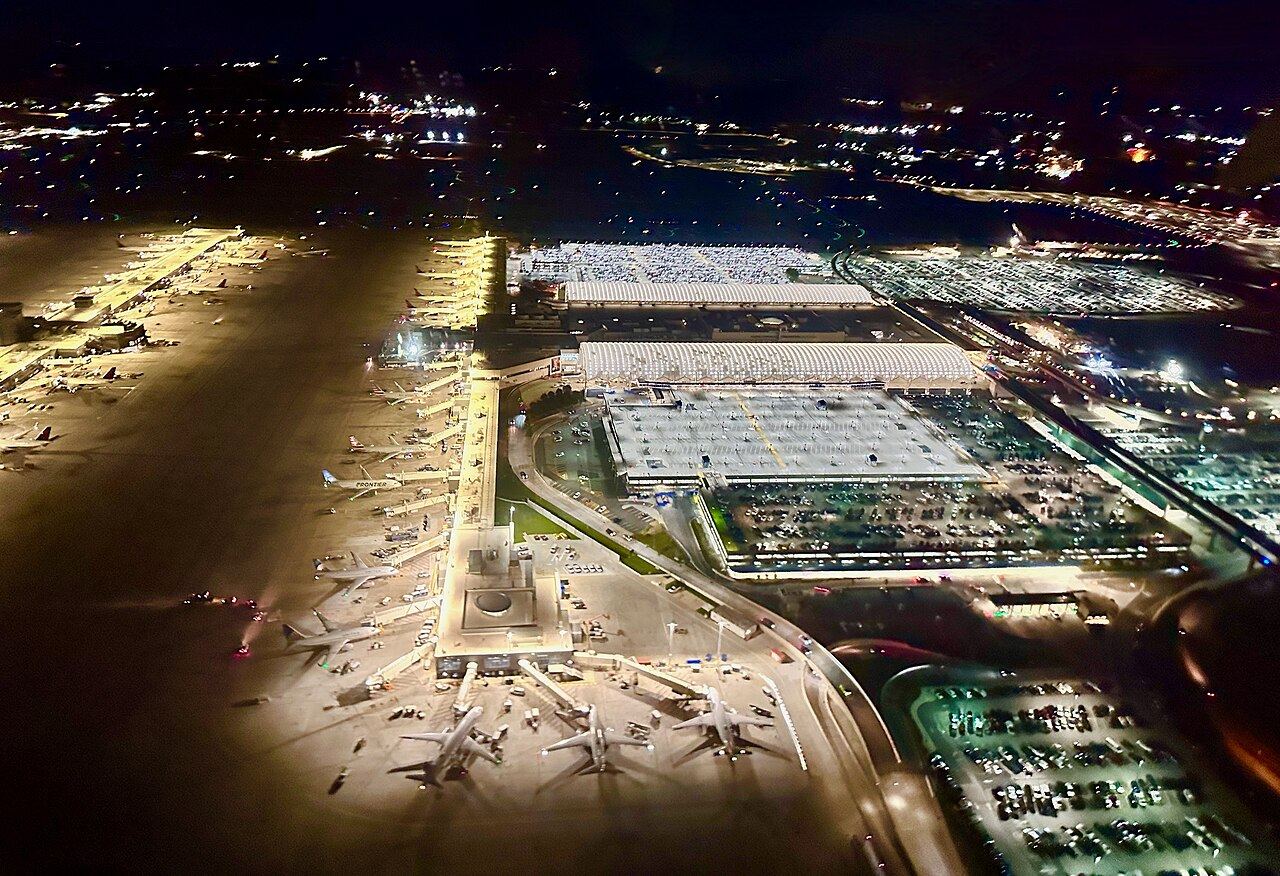
Featured image: Photo: Harrison Keely / Wikimedia Commons, CC BY 4.0 (file photo)