



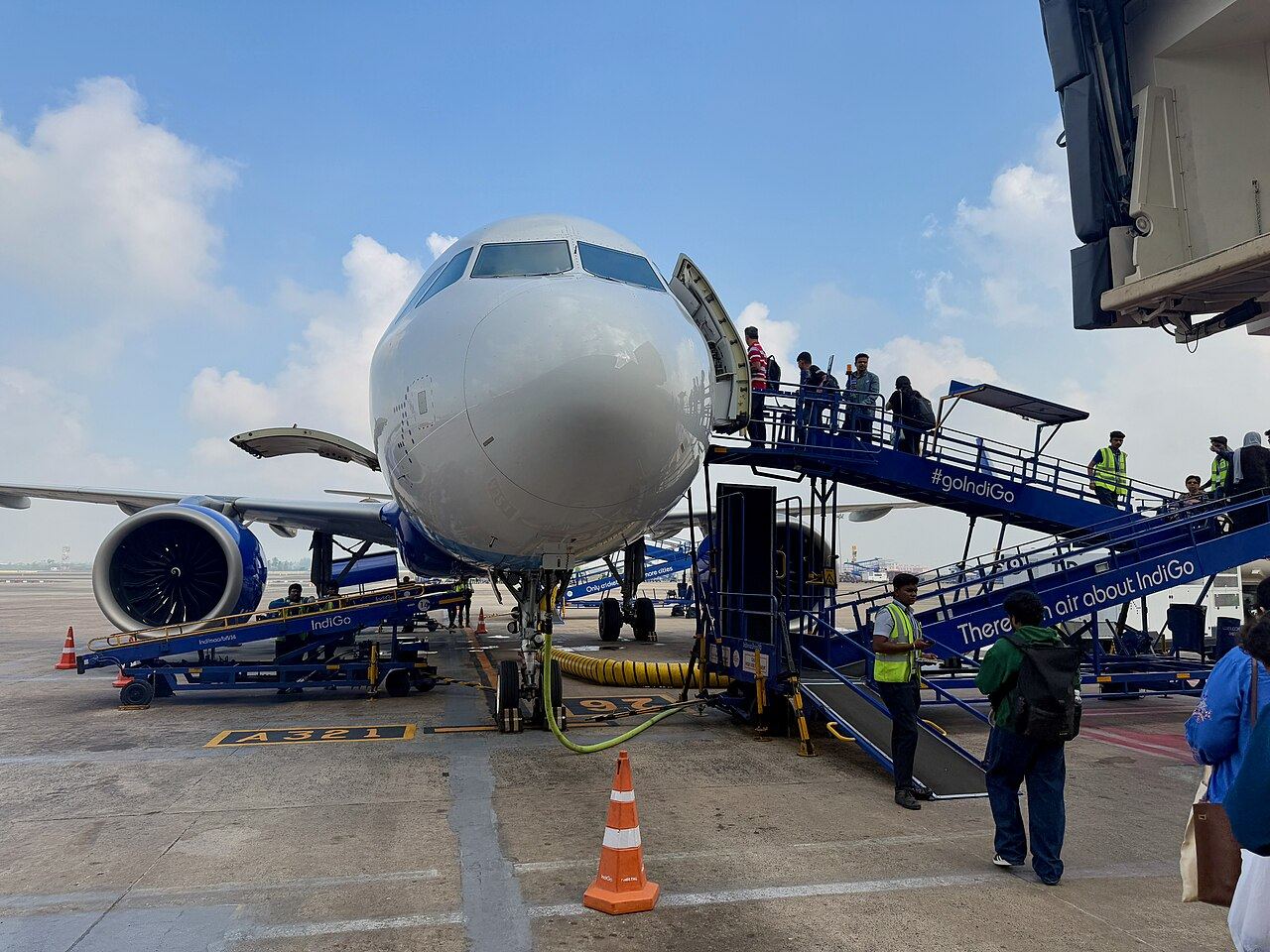
An IndiGo Airbus A321neo operating flight 6E 388 from Mangaluru to Bengaluru rejected its take-off at Mangaluru International Airport on Monday evening, 16 November, after the airline said a technical issue was detected shortly before take-off. All 229 passengers and seven crew members on board were deplaned safely, and no injuries have been reported.
According to reports based on a PTI account, the take-off was abandoned at around 6.05 pm, before the aircraft became airborne. The jet was brought to a stop on the runway and passengers were later disembarked.
What IndiGo has said
In a brief statement, IndiGo said a technical issue had been detected shortly before take-off and that the aircraft would return to service only after the required maintenance and clearances. “As always, the safety of our customers, crew and aircraft is of the utmost importance to us,” an IndiGo spokesperson said.
The airline said it arranged meals, refreshments, hotel accommodation, alternate connections and refunds as applicable for affected customers. A replacement aircraft was organised for the sector, although reports say only 34 of the 229 passengers chose to travel on the relief flight, which was scheduled to leave Mangaluru after midnight.
Reports differ on the nature of the problem
Accounts of what happened on the runway vary. The Aviation Herald reported that the crew rejected the take-off at high speed after the left engine produced bangs and flames, and identified the aircraft as the A321neo registered VT-IBB departing from runway 24. Some Indian outlets reported sparks beneath the aircraft or a tyre burst during the take-off roll.
IndiGo has not confirmed any of those specific details, and no official finding on the cause has been published. Any investigation by the Directorate General of Civil Aviation (DGCA) or the Aircraft Accident Investigation Bureau would be expected to establish the sequence of events and the root cause. Until then, the precise nature of the fault remains unconfirmed.
Why Mangaluru draws extra attention
Mangaluru is one of India’s more demanding airports, with a tabletop runway set on a plateau. That geography makes any high-speed event on its runway a matter of particular interest to pilots and regulators, even when, as in this case, the aircraft stops safely and everyone walks away unhurt.
A rejected take-off is a standard, trained manoeuvre. Pilots brief the decision speed before every departure, and an abort below that speed in response to a failure or warning is exactly the outcome procedures are designed to produce.
What it means
The incident comes on the same day that a team from the US Federal Aviation Administration was scheduled to begin a five-day assessment of India’s aviation safety oversight system, a coincidence that is likely to keep attention on how quickly technical events are reported and investigated.
For IndiGo, which operates the country’s largest A320-family fleet, the immediate operational impact appears limited to one aircraft and one disrupted rotation. The more important question for passengers and the industry will be what the technical review finds, and whether it points to an isolated defect or something that requires wider checks. 150knots will update this story when the airline or the regulator shares more information.
Featured image: Photo: Oleg Yunakov / Wikimedia Commons, CC BY-SA 4.0 (file photo)





Comments 1