






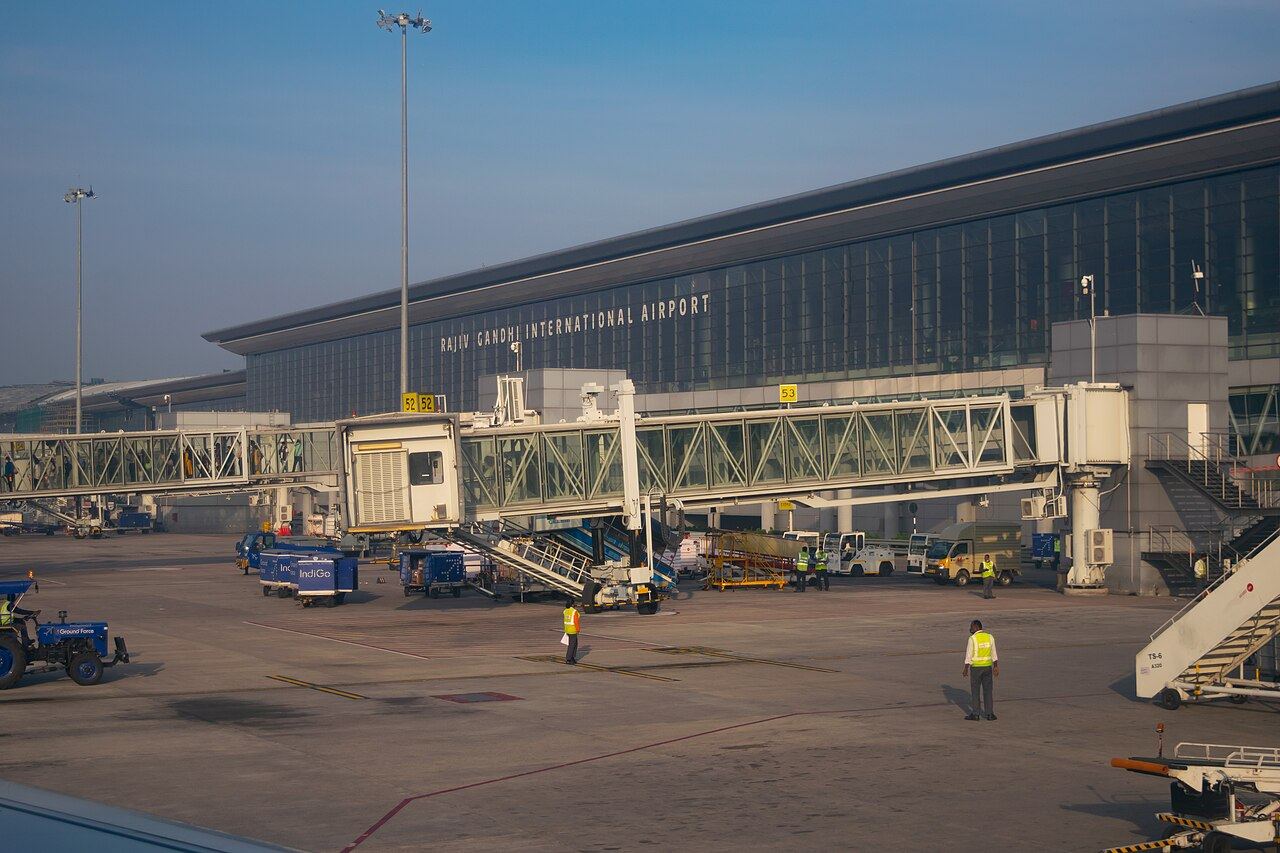
GMR Aero Technic plans to invest around Rs 600 crore to expand its maintenance, repair and overhaul (MRO) facility at Hyderabad’s Rajiv Gandhi International Airport, nearly doubling capacity by 2029, according to reports published on 10 November 2026 citing a senior company official.
The company aims to take the facility to around 18 maintenance lines by 2029, including three additional lines for wide-body aircraft. Once the expansion is complete, the site is expected to be able to accommodate up to seven wide-body aircraft at a time.
Wide-body painting a first for India
As part of the plan, GMR Aero Technic intends to offer wide-body aircraft painting, which the company describes as a first for the country. Painting is often bundled with heavy maintenance checks, and the absence of a domestic wide-body paint hangar has been one reason Indian operators send larger aircraft abroad.
The company has also said it will look at serving overseas customers from Hyderabad, potentially attracting work that currently goes to facilities outside India.
Who GMR Aero Technic is
GMR Aero Technic is a third-party airframe MRO provider based at Hyderabad airport and part of GMR Hyderabad International Airport Ltd (GHIAL). Its recent contracts span both civil and defence work. In May 2026 it signed an agreement with Boeing Defence India to carry out Phase-56 heavy maintenance checks on the Indian Navy’s Boeing P-8I aircraft at Hyderabad.
In September 2026 it announced a supplier service agreement with StandardAero to provide on-wing engine support to narrowbody operators in India, initially covering CFM56-7B, LEAP-1A and LEAP-1B engines. That engine-support tie-up is separate from the new airframe expansion.
What it means for Indian aviation
Indian airlines have placed orders for hundreds of new aircraft, including large wide-body fleets for Air India and, from 2028, IndiGo’s A350s. Most detailed MRO work on wide-body aircraft is still carried out overseas, adding cost and time out of service for Indian operators. Additional domestic hangar capacity for wide-bodies addresses part of that gap.
The government has been pushing for more of India’s MRO spending to stay in the country, and airport-linked MRO parks such as Hyderabad’s are central to that strategy. Still, airframe capacity is only one piece of the picture. Industry observers note that engine shops, component repair and a larger pool of licensed engineers are also needed if India is to become a regional MRO hub rather than a net exporter of maintenance work.
For now, the GMR plan is one of the more concrete capacity commitments in the sector, with a defined budget, a target of roughly 18 lines and a 2029 horizon.
Featured image: Photo: Nikhil B / Wikimedia Commons, CC BY 3.0 (file photo)